

Public opinion polls
We run public opinion polls across South Africa for organisations that need a clear view of what people think, feel and prioritise. From Braamfontein we coordinate national and provincial work with transparent methods, careful fieldwork and reporting that explains how the poll was done.

Public opinion polling for South Africa
Public opinion polling helps organisations test sentiment on public issues, measure shifts over time and understand how views differ by province, language, age group or settlement type. We work across all nine provinces, combining questionnaire design, sampling, fieldwork, weighting and reporting into one process that clients can follow from start to finish.
Our polling work is used by brands, agencies, NGOs, associations and policy teams that need reliable evidence rather than noise. We are non-partisan in how we work. We do not campaign, canvass or predict election results, and we do not publish client data.
Choose the right type of poll
The best polling approach depends on the decision you need to make. Some clients need a broad national picture. Others need a provincial read, or regular tracking on one issue over time. Starting with the right scope saves time and keeps the reporting focused.
- National polls: suited to questions that need a countrywide view across provinces and major demographic groups.
- Provincial polls: useful when conditions differ sharply between provinces, metros and smaller towns.
- Issue tracking: used when you need repeated polling on the same topic to monitor movement rather than a once-off snapshot.
- Mixed-mode polling: combines phone, online and face-to-face methods where coverage or response patterns need extra care.
If you are unsure where to start, a short scoping discussion usually clarifies whether a national poll, a provincial design or issue tracking is the better fit.
National polls versus provincial polls
National and provincial polls answer different questions. A national poll is built for a broad South African view. A provincial poll is tighter in scope and gives more local detail, which matters when public services, transport, safety concerns or local priorities vary from one province to the next.
- Choose a national poll when: you need a single overall reading, comparisons between major groups, or a consistent measure that can be repeated over time.
- Choose a provincial poll when: you need local context, province-level differences, or a clearer picture of one area such as Gauteng, KwaZulu-Natal, the Western Cape or the Eastern Cape.
- Choose both when: you need a countrywide benchmark plus deeper provincial analysis in selected areas.
In practice, clients often start nationally and then add provincial work where the first round shows meaningful differences. That route can be more useful than assuming one pattern applies everywhere.
How we collect poll data
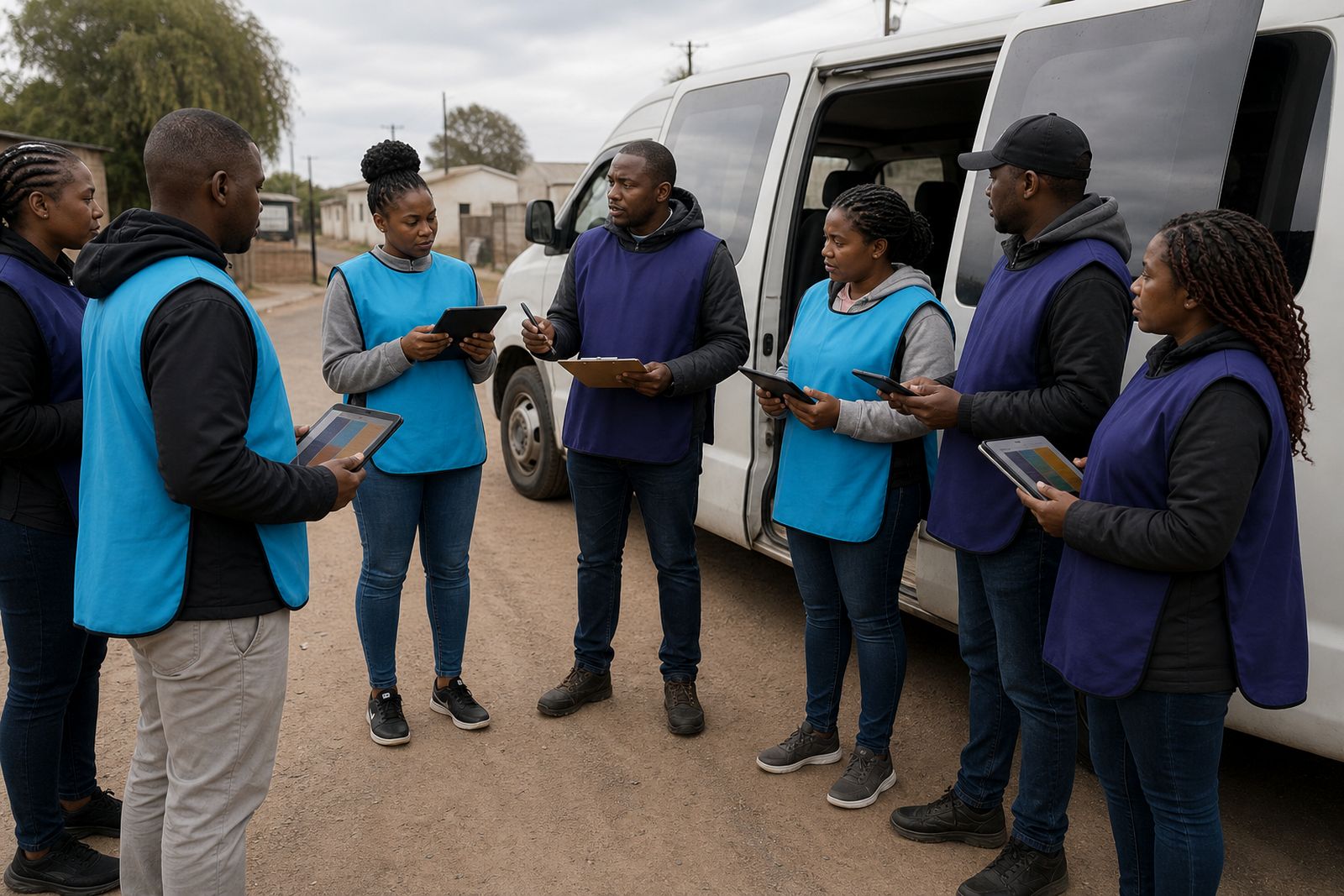
Fieldwork method affects who you reach and how questions land. South Africa is diverse in language, connectivity and daily routine, so mode choice matters. We run polls through phone and online panels, and where needed we add face-to-face interviews in all official languages.
Phone work can be efficient for broad reach and quick turnaround. Online panels can help with testing structured questions among connected groups. Face-to-face interviewing is valuable where digital access is uneven, where language needs are wider or where community context matters more. During load-shedding periods field plans need careful timing, and in some areas transport and venue access can affect schedules a bit.
- Phone: useful for wide geographic spread and quick field periods.
- Online: useful for fast questionnaire routing and structured comparisons.
- Face-to-face: useful for inclusion, language coverage and harder-to-reach communities.
Question design, sampling and weighting
A poll is only as useful as the question wording and the sample behind it. We write fair, plain-language questions that avoid pushing respondents toward one answer. Where a topic is sensitive or easily misunderstood, we refine wording before the main fieldwork starts.
Sampling plans are set to match the purpose of the poll and the population being studied. After fieldwork, weighting is applied where appropriate so that the final dataset better reflects the target population. Our reports explain the method notes clearly, including mode, questionnaire approach, fieldwork frame and any limits on interpretation. That clarity matters when findings are being read by boards, campaign teams, policy units or the media office of an organisation.
What clients receive
This section covers the different polling options available through Populism Polls, from national and provincial polls to issue tracking. The listing pages below this hub will help you choose a route based on geography, frequency and the level of detail you need.
Clients receive reporting that is practical and readable, not padded out. We set out what was asked, how the work was done and what the answers mean for the brief. Where useful, findings can be broken out by province or key audience segments, provided the research design supports that reading.
- Clear reports written for decision-makers.
- Method notes that explain how the poll was conducted.
- Cross-tab and subgroup analysis where suitable.
- Confidential handling of client data and project material.
If you are planning a public opinion study, use the enquiry form on our contact page and outline the issue, audience and timeframe. We can then guide you to the most suitable polling option.

What our Opinion Polling customers say
Verified Google reviews
Questions we get asked
What is the difference between a public opinion poll and a survey?
A public opinion poll usually focuses on views about public issues, priorities or sentiment in the wider population. A survey can be broader and may cover customers, employees, members or a defined audience rather than the public at large.
Do you publish the results of client polls?
No. We do not publish client data. Reporting is prepared for the client, and our work is carried out on a confidential basis.
Can you run polls in more than one language and province?
Yes. We run polling nationally across all nine provinces and can conduct face-to-face interviews in all official languages, with phone and online work used where suitable for the brief.
Tell us about the job
Send sizes, materials and where you are through our contact form, and we will come back with the practical options.
Open the contact form