

Our methodology
Good polling depends on more than asking questions. Our methodology covers how we draw samples, write fair questionnaires, manage fieldwork and weight data so clients can read findings with the right context.

What this section covers
This methodology section explains the main choices behind a poll or survey and why those choices matter. It is written for organisations that need dependable evidence, whether the project is a national poll, a provincial tracker, a consumer study or an internal stakeholder survey.
You will find plain-language guidance on sampling and weighting, question wording and the trade-offs between different fieldwork modes. The aim is simple: to help clients understand how a study is built before fieldwork starts, and how to read the final report once interviewing is done.
Use this section if you need to compare options before commissioning work, or if you want method notes that are easier to follow than a technical appendix.
How we choose the right sample
A useful survey starts with the right target population. That could be adults nationally, residents in one province, customers in a category, members of an association or employees in a specific structure. We define that population first, then select a sampling approach that fits the decision the client needs to make.
In South Africa, sampling often needs careful attention to province, settlement type, language, age and other relevant characteristics. National work has different demands from a study focused on one metro or one sector. The sample design should match the real world, not just the easiest list to reach.
- National and provincial polls: best when the aim is to understand public opinion across geographies and compare areas consistently.
- Consumer and brand surveys: suited to category users, buyers or decision-makers where behaviour matters as much as opinion.
- Employee and member surveys: useful when the client has a defined population and needs structured feedback inside an organisation or association.
Our Sampling and weighting page goes into more detail on how these decisions are made and what each option can and cannot support.
Writing fair questions that people can answer
Question wording has a direct effect on data quality. We write questionnaires to be clear, neutral and practical, with terms that ordinary respondents can understand in the language of interview. We avoid loaded phrasing, double questions and unnecessary jargon.
Order also matters. Earlier questions can influence later answers, so a questionnaire needs a sensible flow from screening to main topics to demographics. On longer studies we also watch respondent fatigue, because tired respondents give weaker answers and sometimes rush through the last part.
- Use plain wording: ask one thing at a time and define unfamiliar terms.
- Keep balance: do not push respondents toward a preferred answer.
- Match the mode: phone, online and face-to-face each need slightly different phrasing and length.
- Test before launch: a short pilot often shows where a question is unclear or too long.
Our Writing fair questions page unpacks these points with more detail for teams that need to review or approve questionnaires internally.
Choosing between face-to-face, phone and online
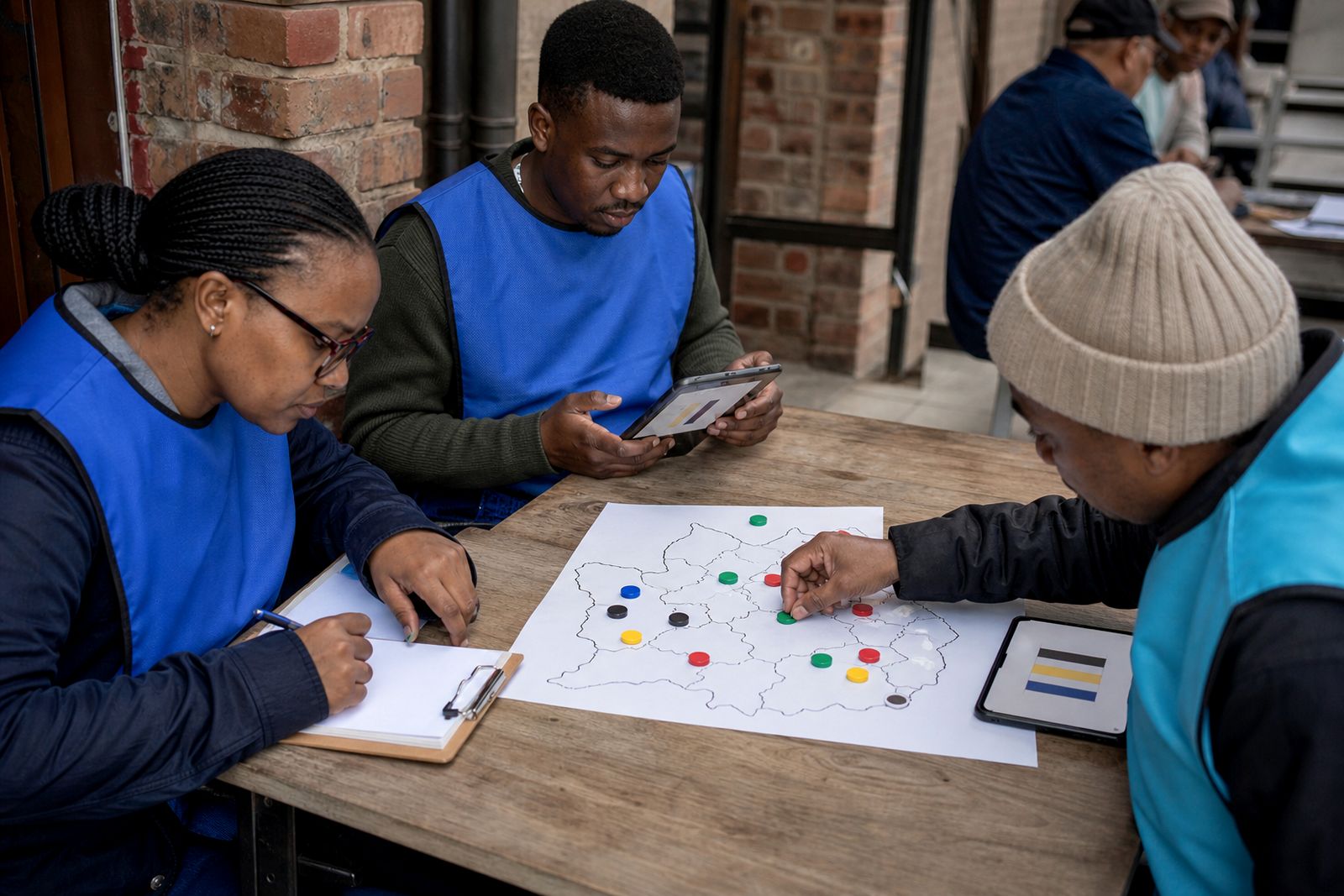
Different fieldwork modes suit different research jobs. There is no single best method in every case. The right choice depends on who needs to be reached, how sensitive the topic is, how long the questionnaire will be and how quickly results are needed.
- Face-to-face interviews: helpful when coverage matters across diverse communities, when language flexibility is important or when respondents are less likely to complete an online survey. This mode can work well for deeper engagement, but takes more planning and field control.
- Phone interviewing: useful for faster turnaround and structured interviewing across provinces, especially when questionnaires are moderate in length.
- Online panels: suited to quick studies, concept testing and audience groups that are comfortable responding digitally. They can be efficient, but panel quality and target fit need close attention.
If you are deciding between options, start with the audience first. A method that is convenient for the client may not be the best way to reach the people whose views actually matter, and that is where projects can drift off course.
Why weighting is used after fieldwork
Even with a careful sample design, completed interviews do not always line up neatly with the population being studied. Some groups are easier to reach than others. Weighting is the process used to bring the final data closer to the intended profile so that analysis reflects the target population more fairly.
Weighting is not a trick and it does not fix a poor questionnaire or unsuitable sample frame. It is one step in a larger quality process. Applied properly, it helps correct imbalances that can arise during fieldwork and improves comparability across sub-groups.
For clients, the main point is this: weighted data should always be read together with the method note. That note explains what population was intended, what mode was used and which factors were considered in balancing the final dataset.
What to look for in a method note
Clear reports should always include a method note written in plain language. This is where readers can see how the work was done and judge whether the findings fit the question being asked. We include method notes because transparency matters, especially when results are used for public communication, policy discussion or strategic planning.
- The target population and area covered.
- The fieldwork mode or combination of modes.
- The interviewing languages used where relevant.
- The broad sampling approach.
- Whether weighting was applied.
- Any practical limits that affect interpretation.
If you are not sure which page in this section to read next, start with Sampling and weighting if your main concern is representativeness. Start with Writing fair questions if your concern is wording, bias or questionnaire flow. If your team is deciding how to collect responses, move on to the Fieldwork pages for a more practical comparison.

What our Opinion Polling customers say
Verified Google reviews
Questions we get asked
Do you publish client survey data?
No. We do not publish client data. Findings and underlying data are handled privately for the commissioning organisation.
Can you work across all provinces and languages?
Yes. We run polls and surveys nationally across all nine provinces and can conduct face-to-face field interviews in all official languages where the project requires it.
Do you predict election results or campaign for any side?
No. We are non-partisan. We do not campaign, canvass or predict election results.
Tell us about the job
Send sizes, materials and where you are through our contact form, and we will come back with the practical options.
Open the contact form