

Public opinion polls and survey research for South Africa
Populism Polls runs public opinion polling and survey research for organisations that need a clear view of what people think. From Braamfontein in Johannesburg, we work across all nine provinces with a practical, transparent approach to fieldwork, sampling and reporting.
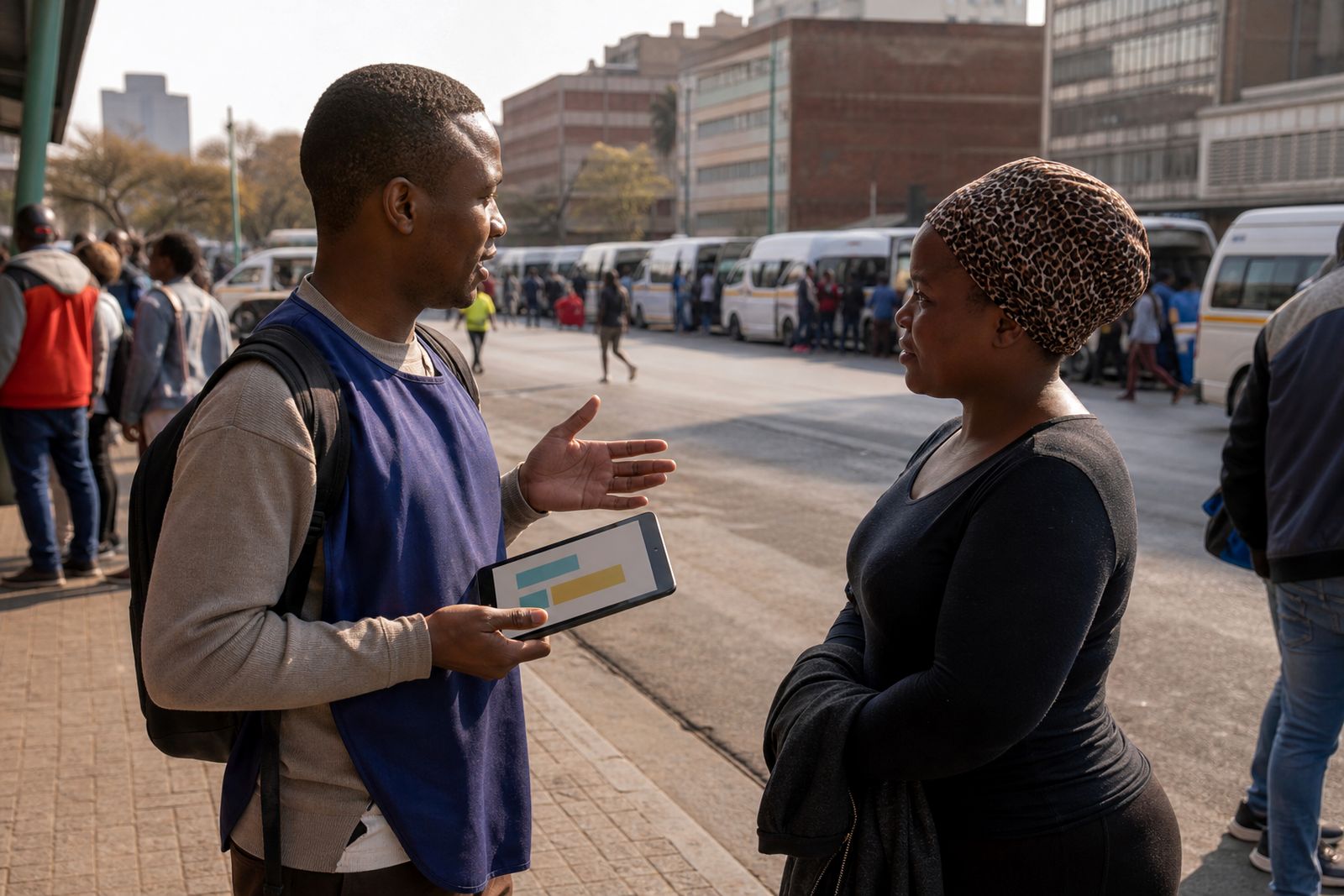
Research that shows what people think
We provide public opinion polls and survey research for businesses, agencies, NGOs, associations and policy teams operating in South Africa. Our work is built for clients that need dependable evidence before making decisions about communication, products, services, membership matters or public-facing policy questions.
That can mean a national poll, a provincial study, a consumer survey, brand research, employee or member feedback, or a mixed project that combines more than one method. Some clients need a quick read on a live issue. Others need a structured research programme over time, with regular tracking and method notes that can stand up to internal review.
Our role is to collect and interpret views carefully, not to campaign or persuade. We are non-partisan, we do not canvass, and we do not predict election results. We also do not publish client data. If a project is commissioned privately, the results stay with the client and the agreed reporting team.
Where to start

Public opinion polls
National and provincial public opinion polls with clear methods, fair questions and practical reporting for decision-makers.
Read more
Survey research
Choose the right survey approach for consumers, brands, employees, members and wider stakeholder groups across South Africa.
Read more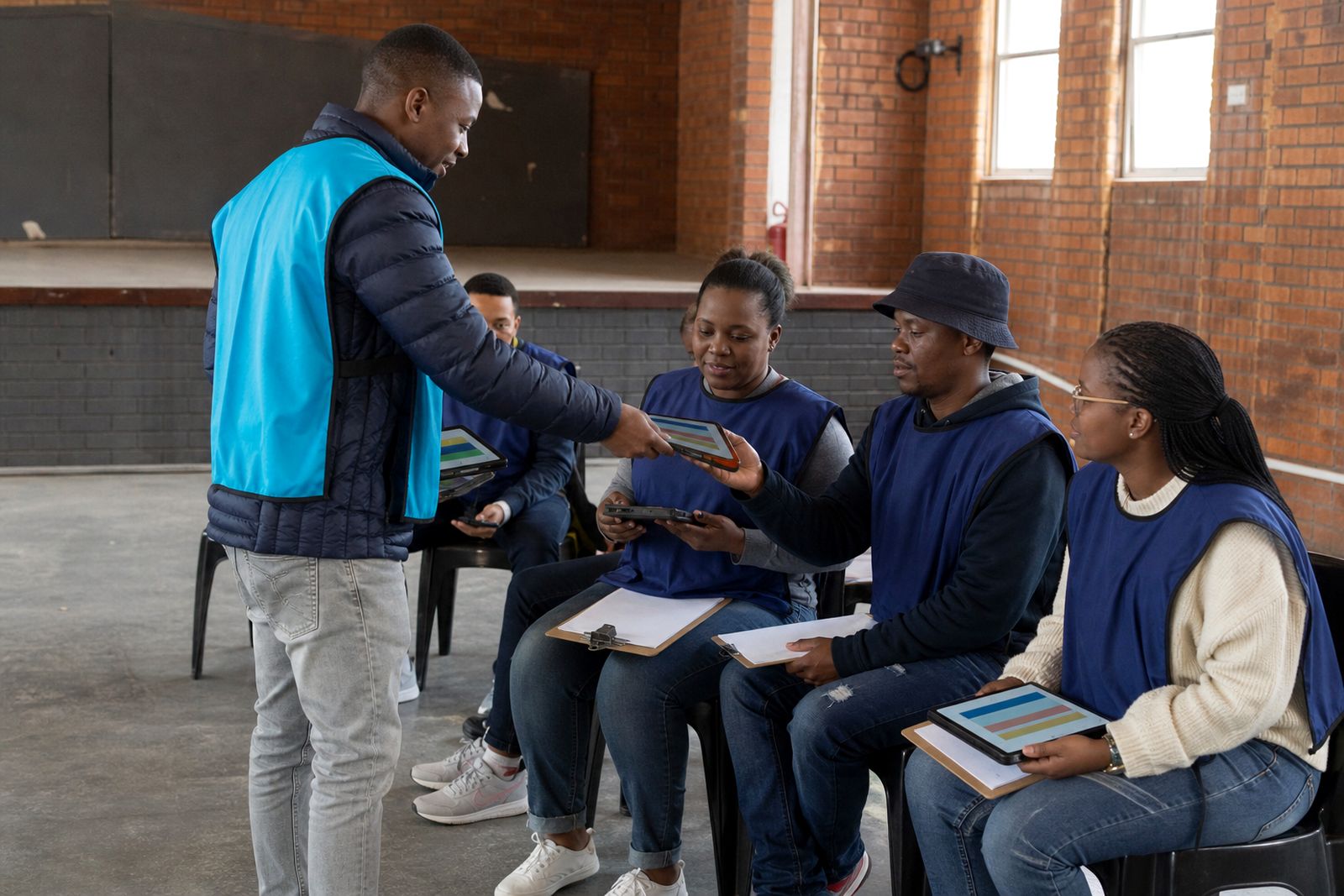
Fieldwork
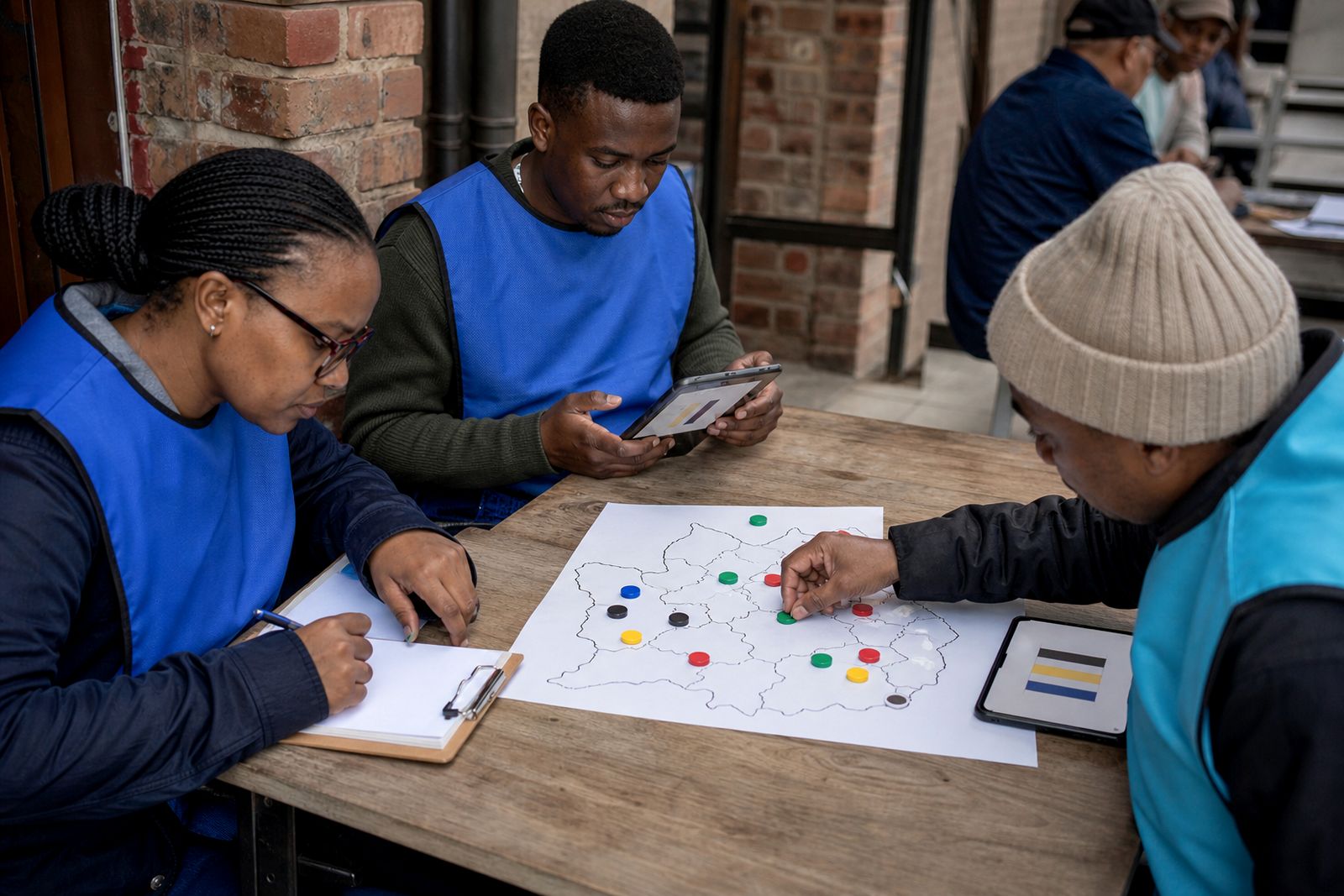
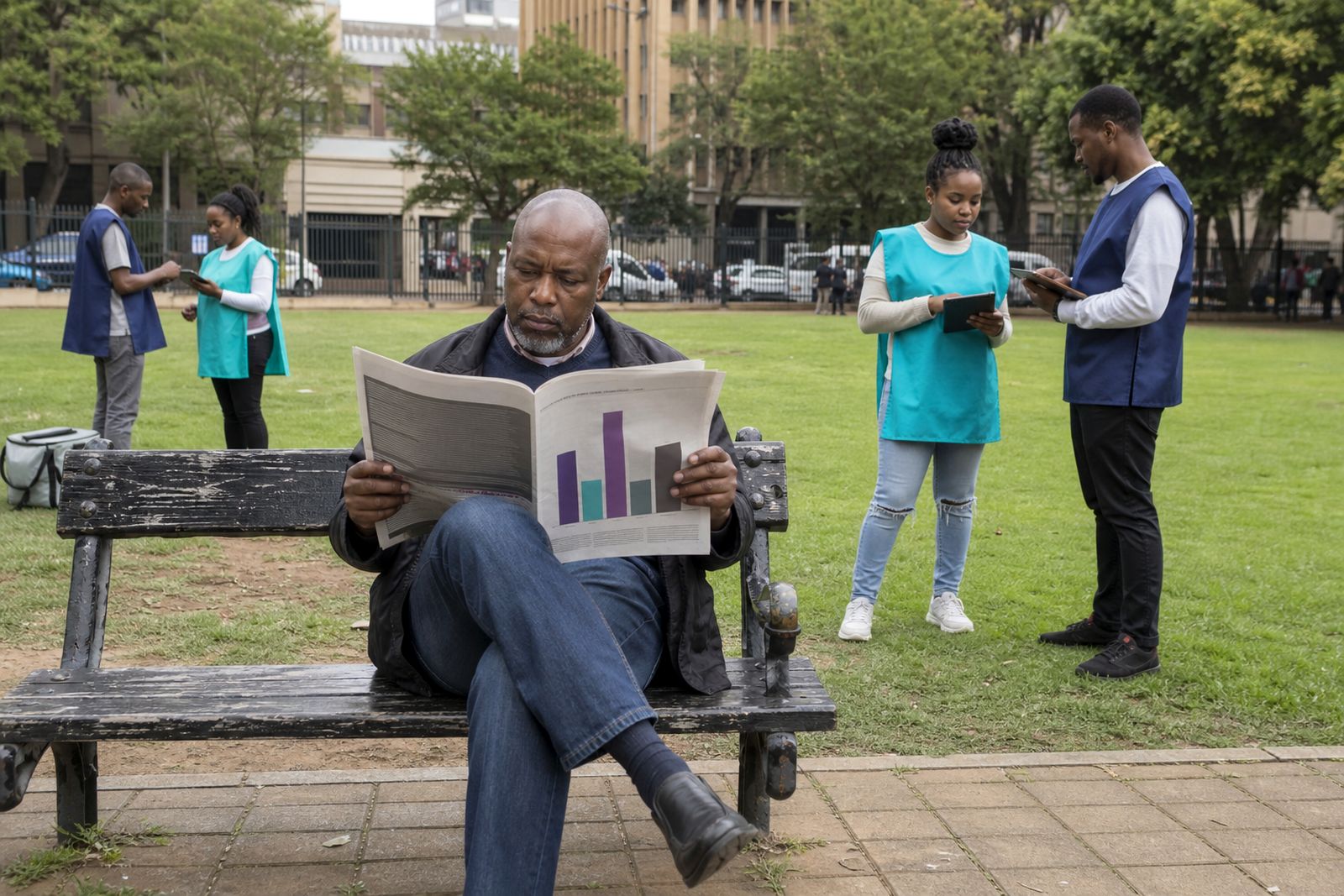
National fieldwork for polls and surveys, from phone and online panels to face-to-face interviewing in every province.
Read more
Our methodology
A practical guide to how we sample, ask questions, run fieldwork and weight survey data.
Read more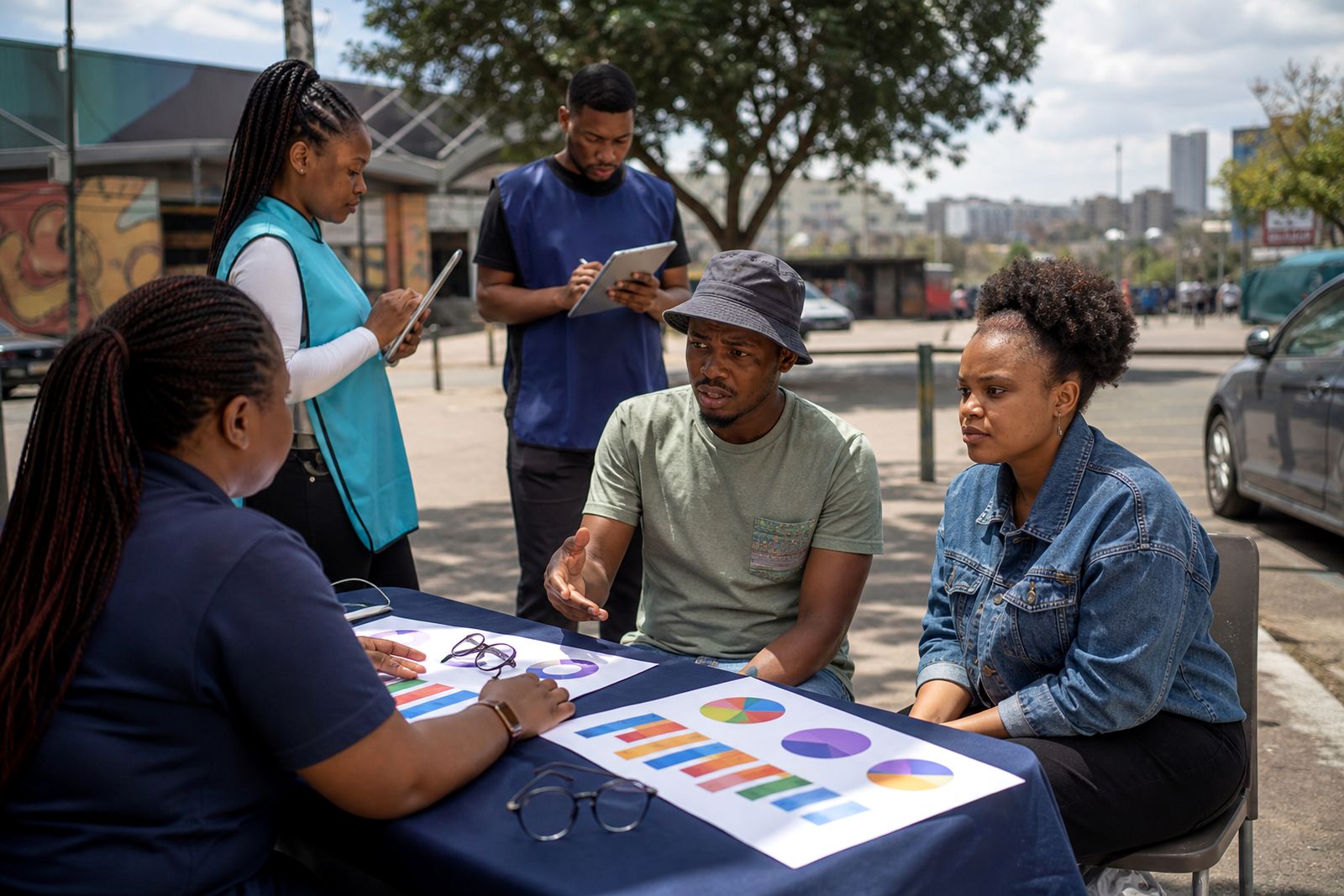
Insights and guides
Straightforward guides on interpreting polls, planning surveys and using findings carefully across South Africa.
Read more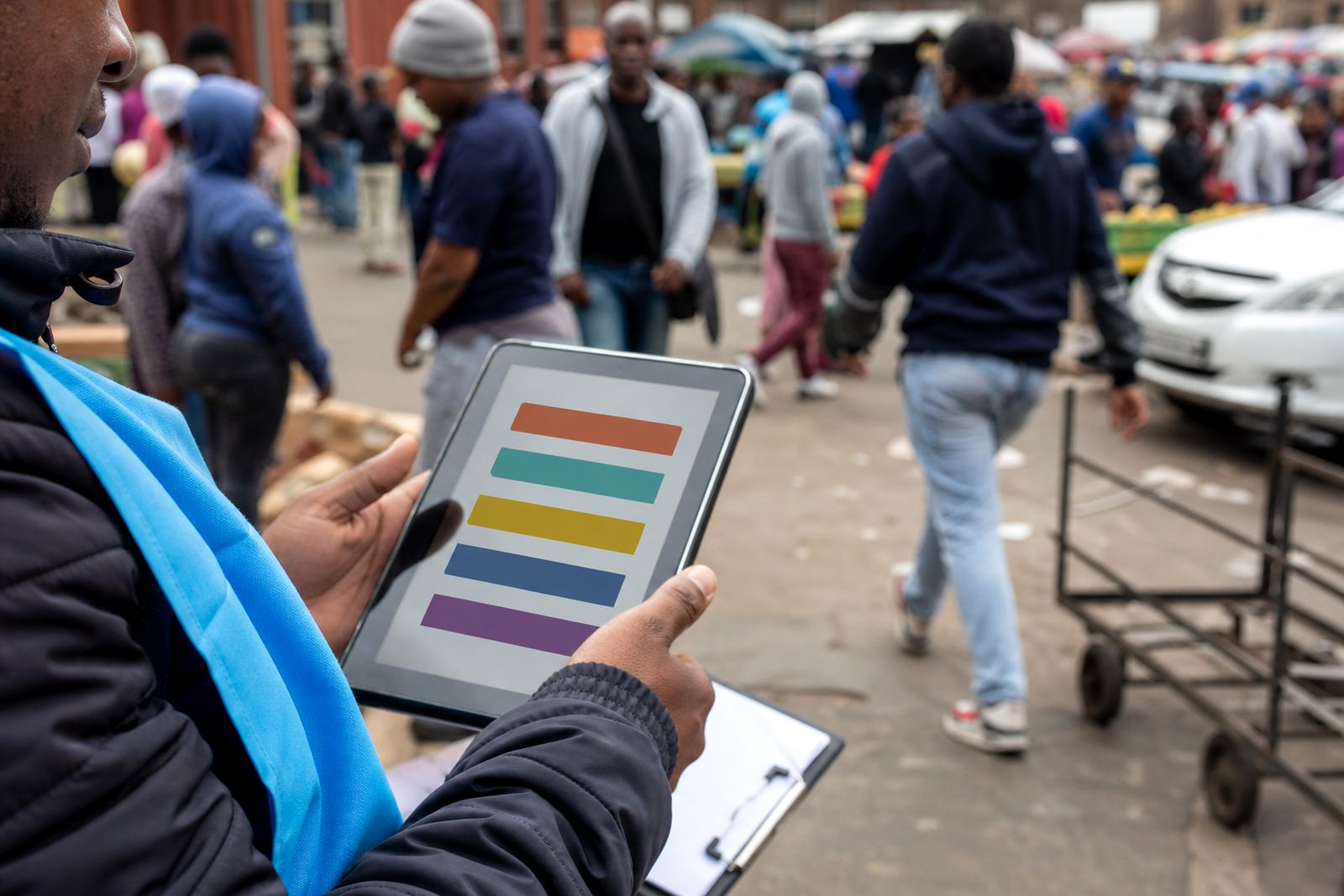
What we supply across polls and surveys
Our work covers the full chain from questionnaire planning through to reporting. We help clients choose the right method for the question at hand, the time available and the audiences they need to reach across urban, peri-urban and rural areas.
- National and provincial public opinion polls
- Issue and policy tracking over time
- Consumer and brand surveys
- Employee and member surveys
- Phone and online panel research
- Face-to-face field interviews in all official languages
- Questionnaire design, sampling and weighting
- Clear reports with method notes
Not every brief needs the same approach. A public-facing issue with language and access barriers may need interviewer-led fieldwork. A fast consumer pulse check may suit phone interviewing or an online panel. In many cases the best answer is a blended approach, especially when clients want to compare views across provinces or audience groups.
Who this suits and where we work
We are based in Braamfontein and work with clients in Johannesburg and across South Africa. Fieldwork and coverage can be arranged nationally, including Gauteng, Western Cape, KwaZulu-Natal, Eastern Cape, Free State, Mpumalanga, Limpopo, North West and Northern Cape.
This service suits organisations that need more than casual feedback. If your team must report to a board, justify a campaign direction, understand public sentiment around a policy issue, or compare consumer behaviour between regions, properly structured research matters. It helps reduce guesswork and makes internal discussions less noisy.
- Brands that need market or audience insight
- Agencies planning campaigns or testing messages
- NGOs and associations tracking member or public views
- Policy teams seeking grounded public feedback
- Organisations needing evidence across provinces or language groups
Because South Africa is varied by language, income, settlement type and connectivity, local context matters. A method that works well in central Johannesburg may not perform the same way in smaller towns or in areas where phone access, data costs or travel conditions affect response rates.
How a typical project runs with us
Most projects start with the enquiry form on our contact page. Once we understand the purpose of the study, the audience and the decisions the findings must support, we map out a practical plan. That includes the recommended field method, questionnaire structure, geography, timing and reporting format.
We then draft or refine the questionnaire so that the wording is fair and clear. This stage is important because small wording choices can shift how people understand a question. If the target audience spans multiple provinces or languages, we also plan carefully for translation and interviewer guidance.
After that, we set the sample plan and weighting approach, run fieldwork, and monitor completion quality through the collection period. Depending on the brief, fieldwork may be face-to-face, by phone, through online panels, or a combination. We keep method records throughout, then clean the data and prepare a report that explains what was asked, who was reached and how the findings should be read.
Clients usually value this part because it avoids black-box reporting. The report is written to be usable by managers and comms teams, but it also includes enough method detail for scrutiny, which helps when findings need to be shared internally.
Why transparency matters in polling
One of the most important parts of this trade is showing how a poll or survey was done. Without that, findings can be misunderstood or overstated. We therefore put method notes alongside our reporting so clients can see the basis of the work.
Transparent research is not only about technical neatness. It protects the client from drawing the wrong conclusion and it helps teams compare one wave with the next on a like-for-like basis. In a South African setting, where access, language, migration between provinces and local events can all affect response patterns, this matters a great deal.
- We explain the field method used
- We document sampling and weighting choices
- We note the wording and order of key questions
- We flag limits that affect interpretation
- We keep client data private
That is also why we are careful about what polling can and cannot do. We measure opinion and behaviour as part of a structured research process. We do not act as campaign operators, and we do not present polling as a shortcut to certainty. Good research reduces risk, but it does not remove the need for judgement.
Fieldwork realities in South Africa
Doing fieldwork well in South Africa takes planning on the ground, not only a questionnaire. Travel times, venue access, neighbourhood safety, load-shedding, school calendars, public holidays and data availability can all affect when and how people respond. A phone study may need adjusted calling windows. Face-to-face work may need tighter routing and local language matching. These are practical issues, but they shape quality.
Language is another major factor. We conduct face-to-face interviews in all official languages, which helps respondents answer in the language they use most comfortably. That can improve understanding on sensitive or technical questions, and it often reduces avoidable confusion in multilingual households. Small details here make a difference and clients dont always see them until a project is under way.
Across the provinces, context also shifts. Metropolitan respondents may be easier to reach through some modes while remote or lower-connectivity areas may need another. The point is not to force every brief into one standard template. It is to choose a method that fits the audience and then report the findings honestly.
From our notes


Questions we get asked
Do you publish the results of client polls or surveys?
No. We do not publish client data. Findings and reports are provided to the client and the agreed project team only.
Can you run research outside Gauteng?
Yes. We are based in Braamfontein in Johannesburg and run polls and surveys nationally across all nine provinces.
Do you work for political campaigns or predict election outcomes?
No. We are non-partisan. We do not campaign, canvass or predict election results.
Tell us about the job
Send sizes, materials and where you are through our contact form, and we will come back with the practical options.
Open the contact form