

How to read a poll
A poll can be useful, but only if you know what you are looking at. This guide explains the checks that matter before you trust a headline or share a finding.
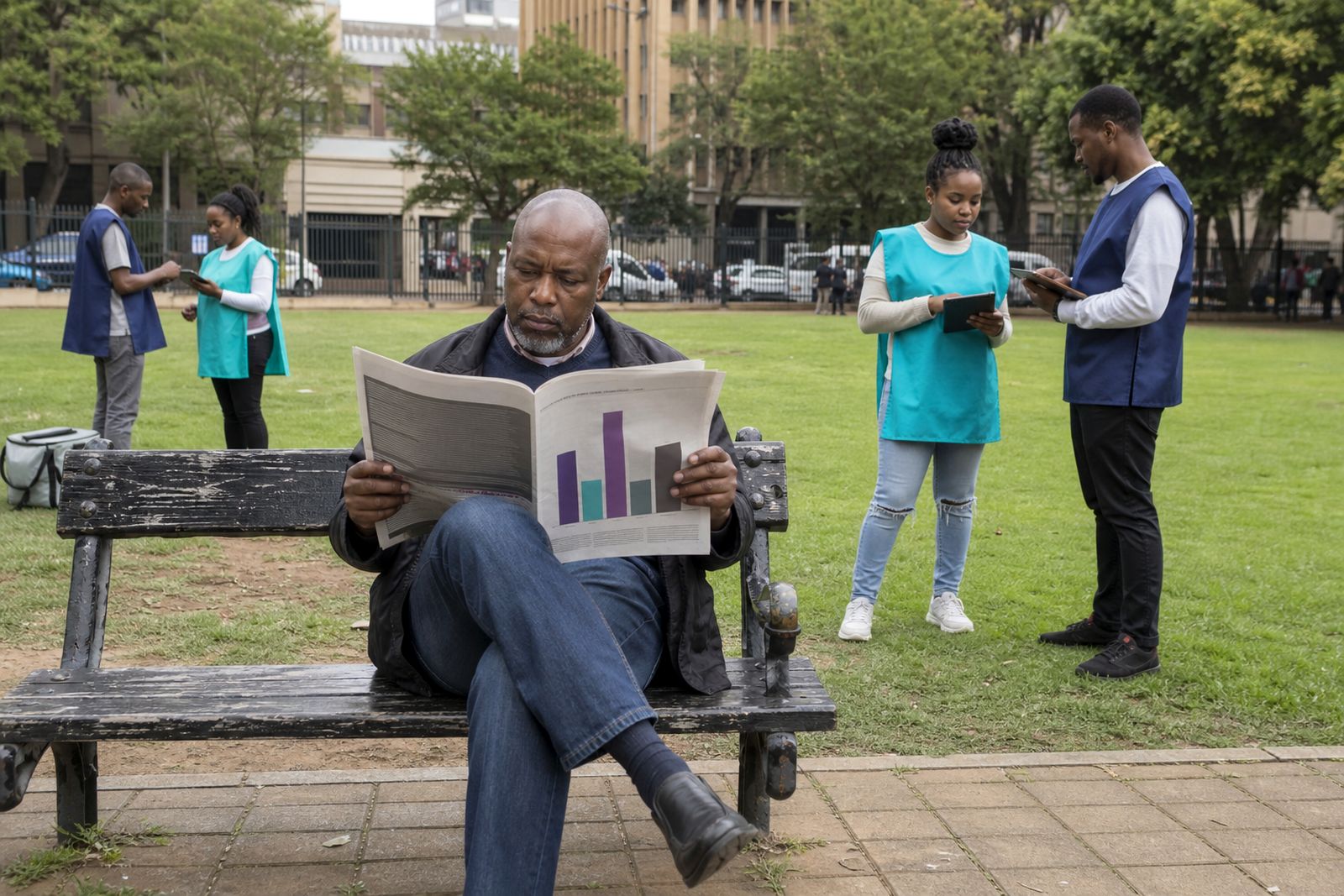
Start with the question behind the headline
Most people first see a poll as a headline, a chart or a short social post. That is usually the weakest way to judge it. A headline often strips out the detail that tells you whether the result is worth using, and what it actually means in practice.
Before anything else, ask what exact question respondents were asked and how it was framed. Small wording changes can shift how people understand an issue. A question about cost, safety, service delivery or trust can produce quite different answers depending on the terms used, the order of options and what came just before it in the interview.
Good polling should let you see the wording clearly, not just a paraphrase. It should also be possible to tell whether the poll measured opinion, awareness, preference or intended behaviour. Those are not the same thing and they should not be reported as if they are.
- Read the exact wording, not just the summary.
- Check whether the question measured opinion, behaviour or awareness.
- Look for any context that may have shaped the answer.
- Be cautious if the headline claims more than the question supports.
Who was actually interviewed
A poll is only about the people it set out to reach. If the intended group was South African adults nationwide, the fieldwork and sampling should match that aim. If it was only urban consumers, members of an association or residents in one province, the result should be read within that boundary and not stretched beyond it.
In South Africa this matters a lot because language, province, settlement type, income patterns and access to mobile data all affect who can be reached and how. A poll conducted only online may under-represent people with lower connectivity. A phone study may miss some groups if contact lists are narrow or calling times are poor. Face-to-face interviewing can improve reach in many places, but quality depends on field control and translation.
Look for a plain description of who was eligible, where interviews took place and in which languages the research was conducted. If the target group is vague or missing, the result should be treated with care.
- Identify the target population clearly.
- Check whether the geography matches the claim, national, provincial or local.
- See whether language coverage was broad enough.
- Ask whether the mode of interviewing could have excluded key groups.
Sample, margins and uncertainty
People often look for one neat figure and treat it as fixed. Polling does not work like that. Any sample-based study carries uncertainty, and that uncertainty grows when you break results into smaller groups such as one province, one age band or one language group.
That is why method notes matter. They should explain how the sample was drawn, how results were weighted and what limits apply when reading subgroup findings. A result that looks dramatic in a headline may sit well within the normal range of variation, especially if the wording is close or public opinion is still fluid.
It also helps to ask whether the reported difference is meaningful in practical terms. Two findings can look different on a graphic but still be too close to treat as a clear lead. Good reporting acknowledges uncertainty instead of hiding it. If there is no mention of margins or limitations at all, that is a warning sign.
Mode, timing and field conditions
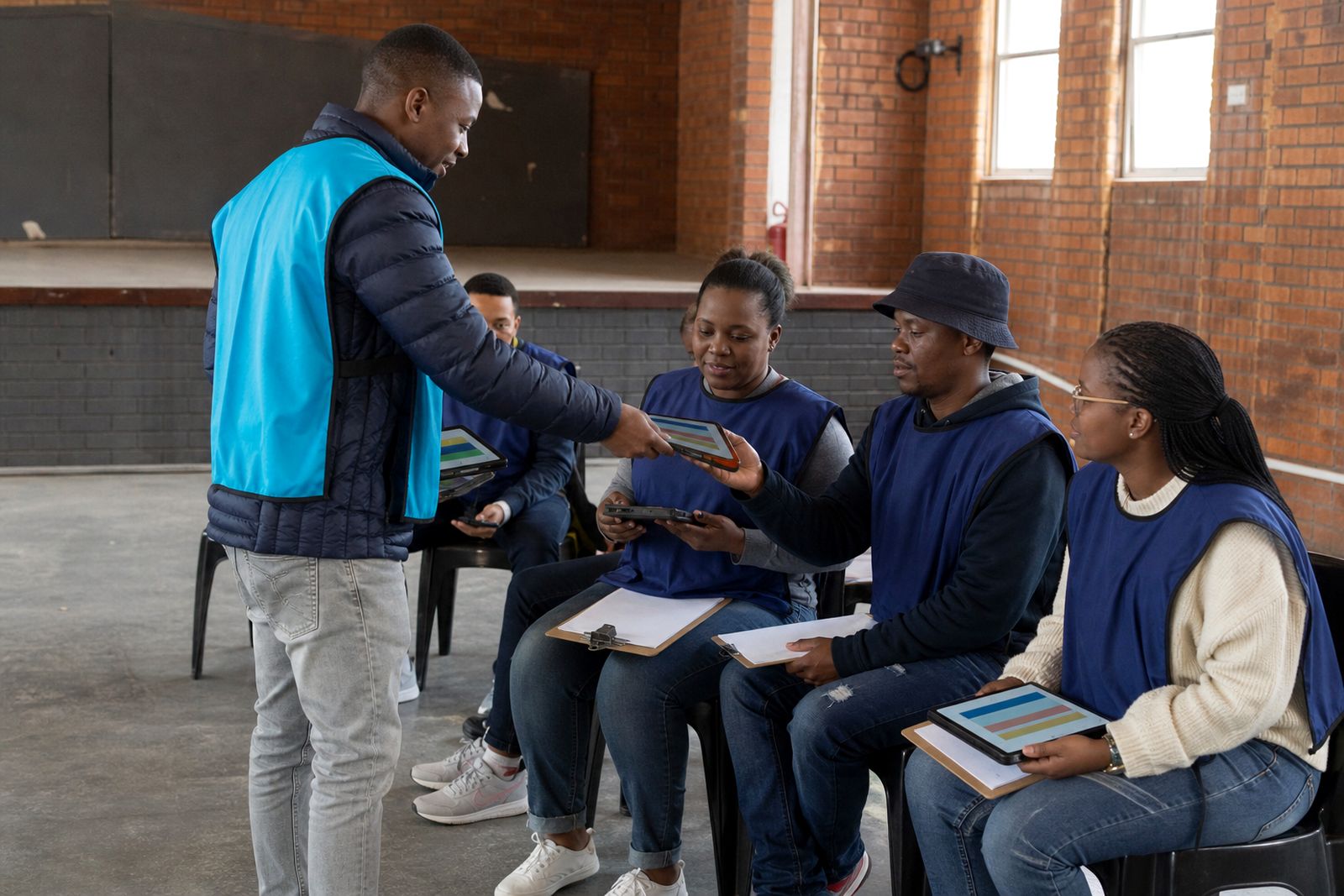
How a poll is run can shape the answers. Phone, online and face-to-face methods each have strengths and limits. Some topics are easier to answer privately online. Others work better with an interviewer who can explain the question in a respondent's preferred language. Sensitive subjects may attract more socially acceptable answers when another person is present, so mode should always be considered.
Timing matters too. Opinions can shift after a major court ruling, a fuel increase, municipal service failure, a wave of load-shedding or a high-profile public incident. If fieldwork happened during a noisy news cycle, that should be noted when results are interpreted. In coastal areas, transport and weather can also affect face-to-face fieldwork schedules. In rural districts, travel conditions and local access rules can influence reach on the day.
A careful poll report will say when fieldwork took place, how interviews were completed and what checks were used in the field. If that information is absent the reader is left guessing.
Weighting, fairness and transparent method notes
Not every group answers surveys at the same rate, so weighting is often used to bring the achieved sample closer to the target population. This is normal and often necessary. What matters is whether weighting was sensible, clearly described and not used to disguise a weak sample.
Fair question writing matters just as much. Loaded language, double questions and missing answer options can push people toward a certain response. A good poll does not campaign, it measures. Transparent method notes should therefore cover questionnaire design, sampling, weighting and any important caveats.
When you read a poll report, look for signs that the researchers tried to make the process understandable to a non-specialist reader. Clear notes build trust because they show how the work was done and where its limits sit, which many reports still dont do well.
- Method notes should explain sampling and weighting in plain language.
- Questions should be balanced and free of obvious leading wording.
- Important caveats should be visible, not hidden in fine print.
- Subgroup results should be treated carefully where uncertainty is higher.
A quick checklist before you cite a poll
If you need to quote a poll in a meeting, report or media response, pause for a final check. This takes only a few minutes and can save a lot of confusion later. A poll should be read as evidence with conditions attached, not as a stand-alone verdict.
Use this short checklist before you rely on a finding.
- Do you know the exact question wording?
- Is the target group clearly defined?
- Are the interviewing mode and field dates stated?
- Is there a method note covering sampling and weighting?
- Are uncertainty and limitations acknowledged?
- Does the headline match the actual finding?
- Are you reading a national result or something narrower?
If several of these points are missing, treat the result cautiously. If most are present and clearly explained, you are in a much better position to judge what the poll can and cannot tell you.
What our Opinion Polling customers say
Verified Google reviews
Questions we get asked
Why can two polls on the same topic look different?
They may have used different question wording, interviewing modes, timing, target groups or weighting approaches. Different methods can produce different results without either poll being automatically wrong.
Does a headline figure tell the whole story?
No. A single figure leaves out uncertainty, subgroup limits, question wording and fieldwork context. The method notes and full wording are often where the real meaning sits.
Should I trust a poll that gives no method detail?
Be careful. If you cannot see who was interviewed, how fieldwork was done and how the sample was handled, it is much harder to judge whether the finding is reliable.
Also worth a look


Tell us about the job
Send sizes, materials and where you are through our contact form, and we will come back with the practical options.
Open the contact form