

Fieldwork
Good fieldwork is where a poll or survey is won or lost. We run interviews across South Africa, with the right mode, the right language coverage and clear quality checks from start to finish.
Fieldwork that fits the question
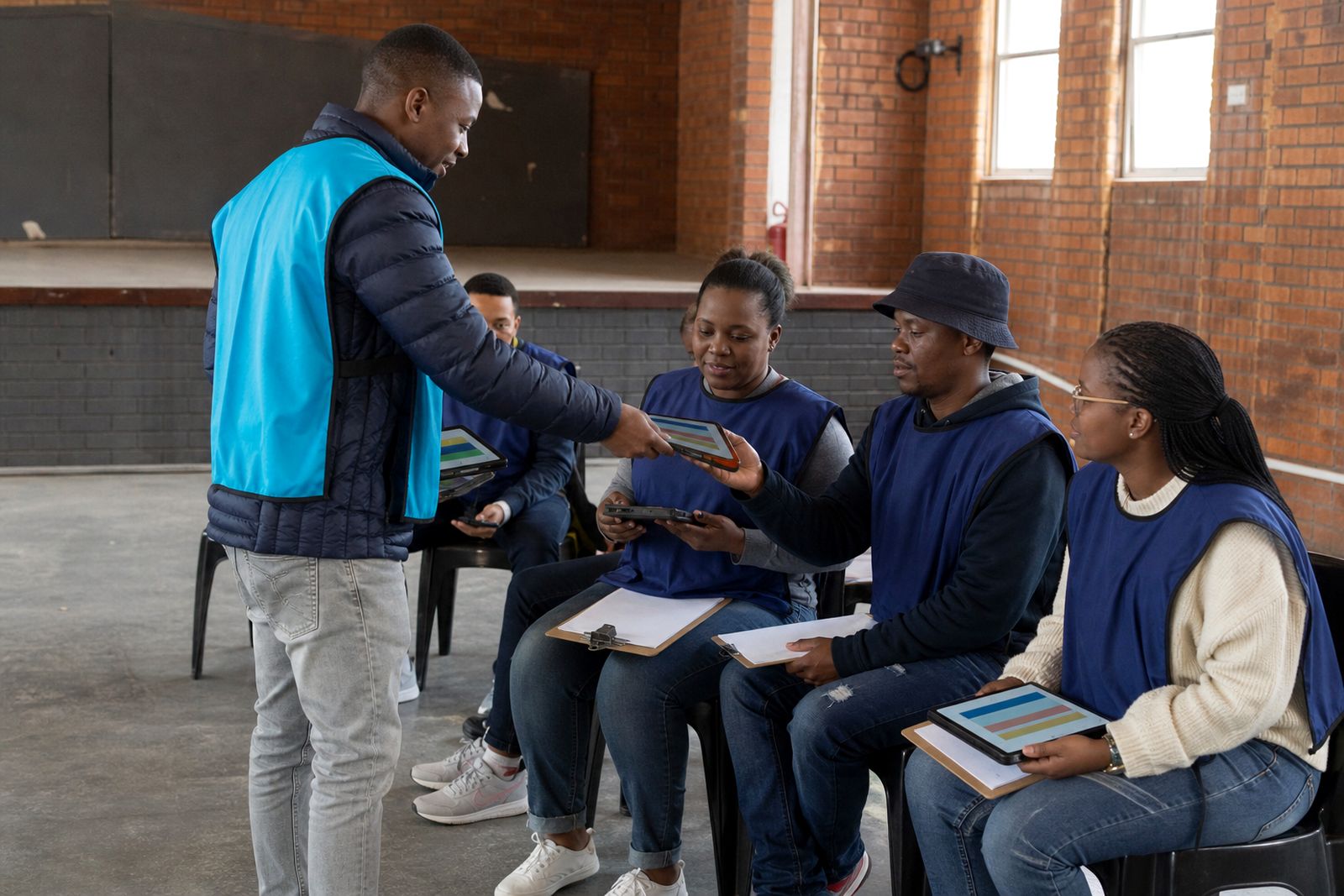
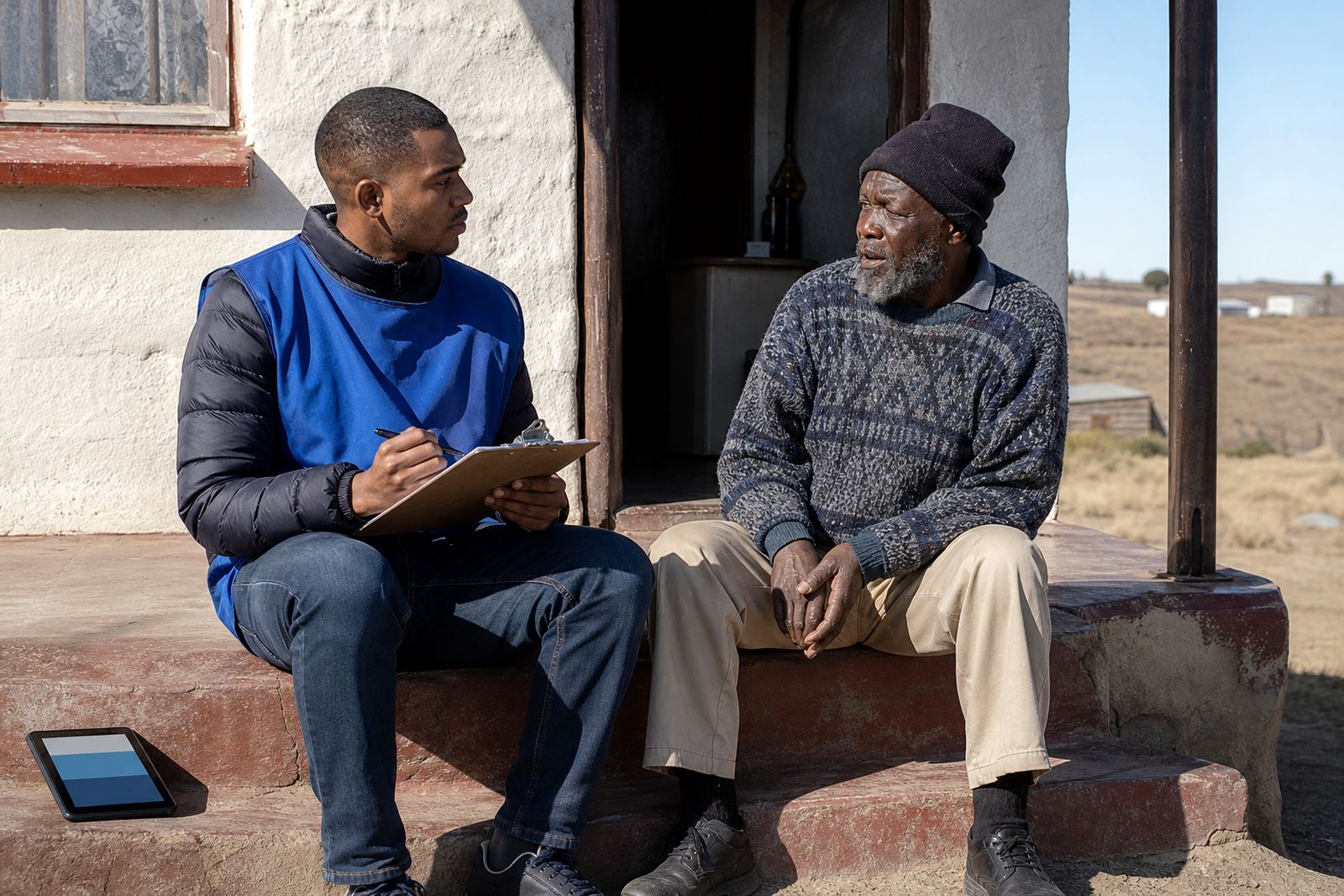
Our fieldwork services cover the practical side of collecting opinions, experiences and reported behaviour from people across South Africa. From our base in Braamfontein we coordinate work nationally, including Gauteng, Western Cape, KwaZulu-Natal, Eastern Cape, Free State, Mpumalanga, Limpopo, North West and Northern Cape. We work with brands, agencies, NGOs, associations and policy teams that need reliable interviewing in urban, peri-urban and rural areas.
This section brings together the main ways we gather data: face-to-face interviews, phone interviewing and online panels. The right option depends on who you need to reach, how sensitive the topic is, how long the questionnaire is and how quickly you need feedback. In many studies, a mixed approach works best because it reduces coverage gaps and gives you a better spread of respondents.
Choosing between face-to-face, phone and online
Each method has strengths and trade-offs. We help clients choose the most suitable route before fieldwork starts, so the plan matches the audience and the reporting goal.
- Face-to-face interviews: useful when you need stronger coverage in areas with uneven connectivity, when language matching matters, or when the target group is harder to reach through remote methods.
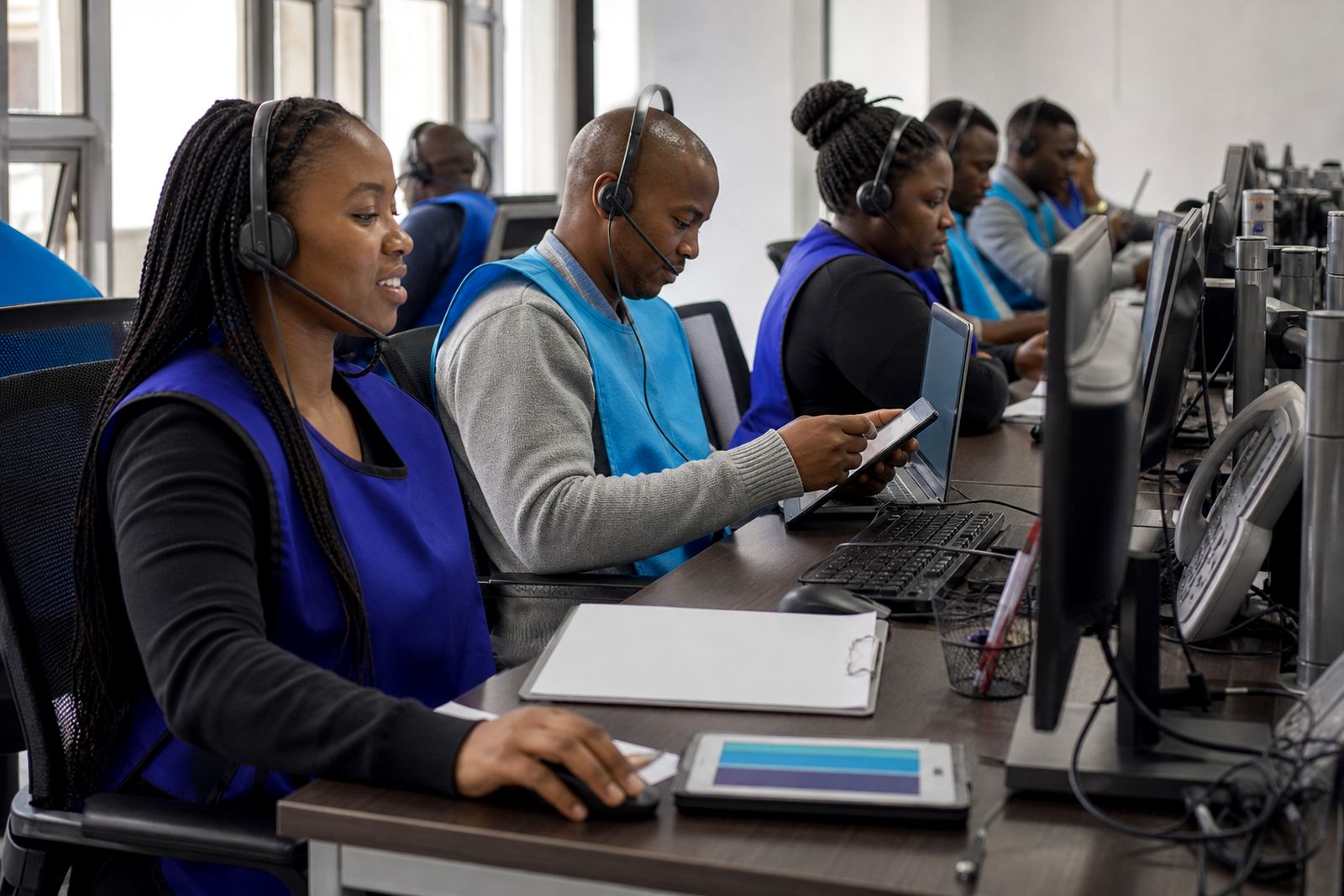
- Phone interviewing: useful for faster turnaround, broad geographic reach and structured questionnaires that can be completed without travelling to respondents.
- Online panels: useful when speed is important, when visual materials need to be shown, or when the target audience is already active online.
- Mixed-mode fieldwork: useful when one method on its own may miss key groups, or when you need to balance reach, timing and budget control.
As a practical guide, face-to-face tends to suit complex location work and community-based interviewing. Phone is often a good fit for national tracking. Online can work well for consumer testing and quick reads, but only when the audience can realistically be reached online. There is no one-size-fits-all answer, and that matters.
Interviews in all official languages
South African fieldwork needs more than a translated questionnaire. It needs interviewers who can speak naturally with respondents and explain questions in a fair, consistent way. We arrange interviewing in all official languages, with planning that takes account of province, settlement type and the likely language mix in each area.
For face-to-face projects this includes matching fieldworkers to local language needs where possible. For phone work it means assigning interviewers who can switch languages cleanly during the call when a respondent prefers another option. We also check wording before launch so questions remain clear across language versions and do not push people toward a preferred answer.
How we manage quality in the field
Reliable fieldwork comes from supervision, verification and careful daily monitoring. Our role is not just to send interviewers out. We manage the process from briefing to closeout, with method notes that explain what was done and any practical limitations that affected coverage.
- Interviewer briefing on question intent, neutral delivery and respondent handling.
- Field progress monitoring by area, mode and quota where applicable.
- Back-checks and validation steps to confirm interviews were conducted correctly.
- Checks for rushed completions, duplicate patterns and inconsistent answers.
- Escalation when weather, local access rules or venue permissions affect the plan.
- Clear records so weighting and reporting can be handled properly after fieldwork.
South African conditions can change quickly. Load-shedding may affect calling windows, heavy rain can slow travel, and some estates, malls or municipal facilities require prior permission for access. We plan for these realities upfront so fieldwork stays orderly and transparent.
What to prepare before fieldwork starts
Fieldwork runs better when the project is properly prepared. Before launch, we normally confirm the target population, geography, interview mode, language requirements, questionnaire length and the reporting use of the results. If a project needs provincial comparison, community-level coverage or audience screening, those details should be settled early because they affect timing and execution.
It also helps to decide how much flexibility you want during fieldwork. Some clients prefer a fixed questionnaire with no changes once interviewing begins. Others may need a staged approach with an early review before the full rollout. Where focus groups or follow-up qualitative work are planned alongside interviewing, we align the schedule so one stream does not distort the other.
What you receive at the end
Our fieldwork output is designed to support the next step in analysis and reporting. Depending on the project, this may include cleaned interview records, disposition summaries, field notes and documentation on how the work was conducted. Where sampling and weighting form part of the study, these are documented separately in the methodology material.
We are non-partisan in every project. We do not campaign, canvass or predict election results, and we do not publish client data. The purpose of fieldwork is to gather views fairly and consistently so clients can make informed decisions with a clear understanding of how the evidence was collected.
If you are deciding between face-to-face interviewing and phone or online panels, this section is the place to start. The pages below explain each option in more detail and help you choose a route that suits your audience, timeline and topic.
What our Opinion Polling customers say
Verified Google reviews
Questions we get asked
Do you run fieldwork outside Gauteng?
Yes. We coordinate fieldwork nationally across all nine provinces, including metro, township, small town and rural areas, depending on the study design.
Can interviews be done in different South African languages?
Yes. We arrange interviewing in all official languages and plan language coverage according to the target audience and the areas included in the project.
How do I choose the right fieldwork method?
It depends on who you need to reach, how quickly you need results, the questionnaire format and whether online or phone coverage is likely to miss important groups. We can advise on the most suitable approach when you enquire through the contact page.
Tell us about the job
Send sizes, materials and where you are through our contact form, and we will come back with the practical options.
Open the contact form