

Phone and online panels
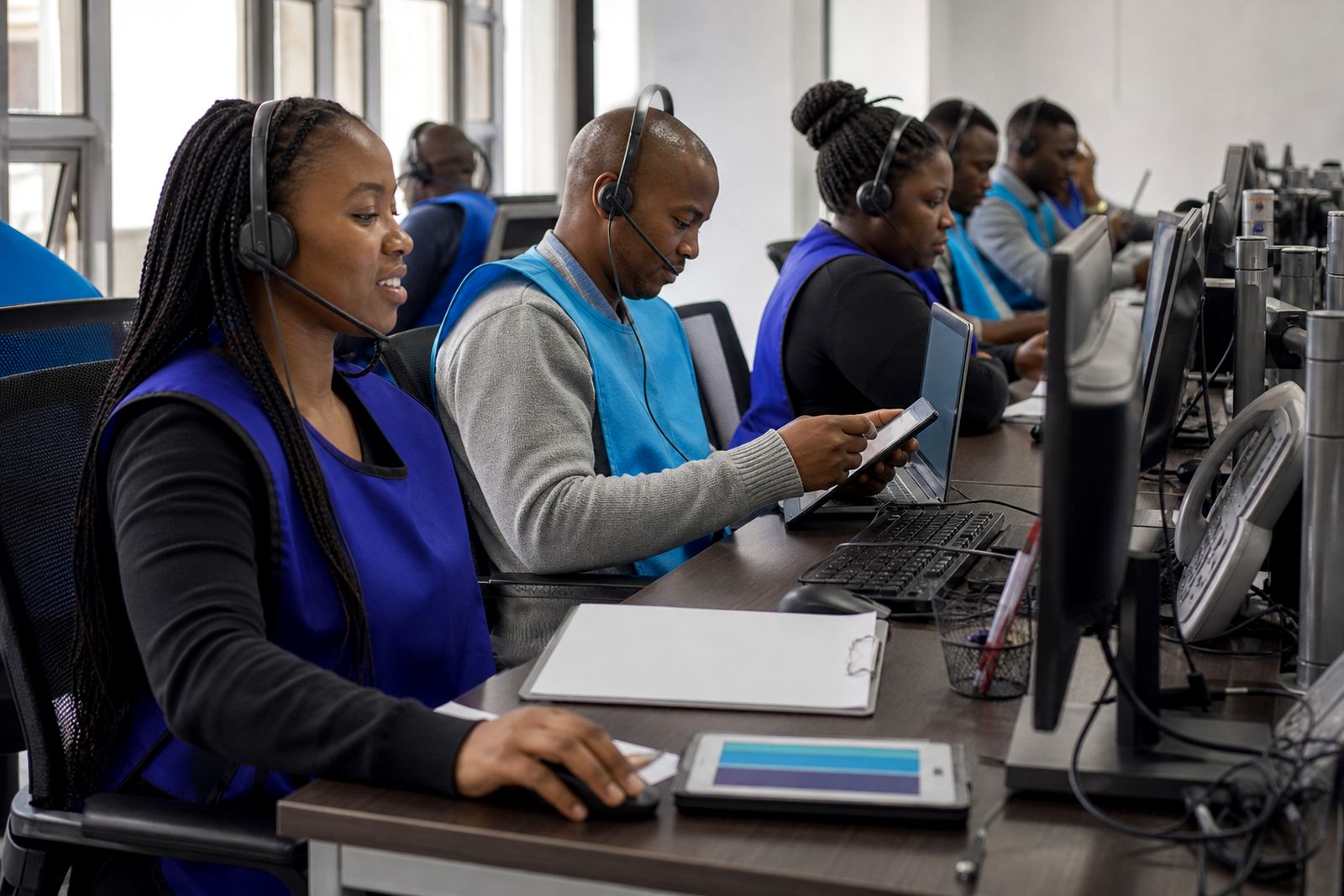
Phone and online panels help clients gather feedback quickly across South Africa without sending field teams on the road. We manage the process from questionnaire setup to field control and method notes, with care for language, sampling and data quality.
What this service includes
Our phone and online panel service is built for organisations that need timely feedback from the public, customers, members or specific target groups. It suits national work as well as focused provincial studies, and it can be used on its own or alongside face-to-face fieldwork where coverage needs to be widened.
We run remote surveys across all nine provinces from our Braamfontein base, using trained interviewers for phone work and managed panel recruitment for online work. Depending on the brief, we can handle short tracking studies, concept checks, issue testing, service feedback and broader attitudinal research. We are non-partisan in how we work and we do not campaign, canvass or publish client data.
- Questionnaire setup and logic checks for phone or online mode
- Sampling plans for national, provincial or defined audience groups
- Fieldwork in English and other official languages where the brief requires it
- Daily field monitoring for quotas, completion patterns and response quality
- Cleaning, coding and preparation of a structured dataset
- Reporting with method notes, weighting notes where relevant and practical caveats
How phone and online panels are used
Phone interviewing works well where a project needs interviewer guidance, language flexibility or stronger control over who completes the questionnaire. It is often chosen for public opinion polling, stakeholder research and studies where questions need neutral reading and consistent probing. Online panels are useful where speed matters, where visuals need to be shown, or where respondents are comfortable completing a survey in their own time.
In many projects the best answer is a mixed approach. A phone component can improve reach among groups less likely to respond online, while an online component can speed up collection in metro areas and among digitally active audiences. We will advise on the fit between mode, audience and timing, rather than forcing one method onto every job. That matters when deadlines are tight or when load-shedding affects calling windows and respondent availability.
Our process step by step
We start with a scoping discussion on the research objective, target audience, geography and timing. From there we review or draft the questionnaire, checking wording, order and length so the survey works in a remote setting. If the study needs quotas, screening rules or weighting targets, these are set before fieldwork opens.
Once the questionnaire is signed off, we prepare the survey instrument, interviewer instructions and field controls. For phone work, calling windows and callback rules are set out clearly. For online work, links, screening paths and device checks are tested before launch.
- Project briefing and research objective confirmation
- Questionnaire review, fair wording checks and scripting
- Sampling and quota plan for the agreed audience
- Soft launch and quality check before full rollout
- Live field management with progress tracking and issue handling
- Data cleaning, coding, weighting where needed and reporting
During fieldwork, our team watches completes, drop-off points and quota balance. If a question is causing confusion or if one province is lagging, we raise it quickly and propose a practical correction. After closeout, we clean the file, check open-ended responses, apply agreed weighting if required, and prepare a report with plain method notes. The result is a usable evidence base, not just a spreadsheet.
What the client should prepare
Projects run better when the brief is clear from the start. Clients do not need to arrive with a finished questionnaire, but they should know what decision the research must support. A survey meant to test public reaction to an issue is different from one meant to track customer experience, and the sample plan follows that difference.
Before fieldwork begins we ask for the essentials: who must be reached, which provinces or markets matter most, what topics are in scope and when the results are needed. If internal approvals are required, it helps to identify the sign-off person early because remote studies move quickly once scripting starts, and late changes can hold things up a bit.
- A short project brief with goals and intended use of the findings
- Target audience details, including any screening criteria
- Priority geographies, languages and timing constraints
- Any draft questions, stimulus material or tracking history
- Rules on confidentiality, handling of sensitive topics and reporting format
How pricing is worked out
Pricing is based on scope and field complexity rather than a flat rate. The main cost drivers are the chosen mode, the incidence of the target audience, questionnaire length, language requirements, quota structure and how quickly the fieldwork must be completed. A short general population online survey is priced differently from a phone study among a harder-to-reach audience spread across several provinces.
Reporting requirements also affect cost. Basic tables and a clean dataset take less time than a full written report with cross-breaks, coded verbatims and a detailed method appendix. Where weighting is required, we factor in the work needed to build, test and document the weighting scheme properly. We explain these elements in plain terms so clients can see where effort sits and choose a scope that fits the decision they need to make.
Quality control, outputs and aftercare
Remote research needs active quality control. For phone work, we monitor interviewer adherence to the script, callback practice and consistency in question delivery. For online work, we watch for speeders, straight-lining, duplicates and low-quality open-ended responses. Checks are built into the field plan from the outset, not added at the end. That keeps the final dataset cleaner and makes the reporting more dependable.
After delivery, we remain available to talk through findings, definitions and method notes with the client team. If a board pack, media briefing note or internal workshop needs plainer wording, we can help structure the explanation without changing the underlying evidence. Where follow-up waves are planned, we keep the questionnaire framework and field notes in order so the next round starts faster. Good aftercare saves time later and helps clients compare like with like.
- Clean dataset prepared for analysis and record keeping
- Tables and summary reporting in an agreed format
- Method notes covering mode, field dates, language and weighting approach
- Post-delivery discussion on interpretation, limitations and next steps
What our Opinion Polling customers say
Verified Google reviews
Questions we get asked
When should we choose phone interviews instead of an online panel?
Phone interviews are often the better choice when respondents need language support, when the target group is less likely to complete online surveys, or when the questionnaire benefits from neutral interviewer delivery. Online panels are useful where speed, visual material or lower respondent burden are the main needs.
Can you run a study in more than one province at the same time?
Yes. We run national and provincial projects across all nine provinces and can structure quotas or reporting splits around the areas that matter to the brief. The final field plan depends on the audience definition and the level of detail required in reporting.
Will our survey data be made public?
No. We do not publish client data. Results, datasets and reporting are handled as client-confidential material, with method notes prepared for the client’s own use and governance requirements.
Also worth a look



Tell us about the job
Send sizes, materials and where you are through our contact form, and we will come back with the practical options.
Open the contact form