

National and provincial polls
National and provincial polls need more than a quick questionnaire and a few responses. We plan each study around geography, language, fieldwork conditions and reporting needs so clients get a fair reading of public opinion across South Africa.
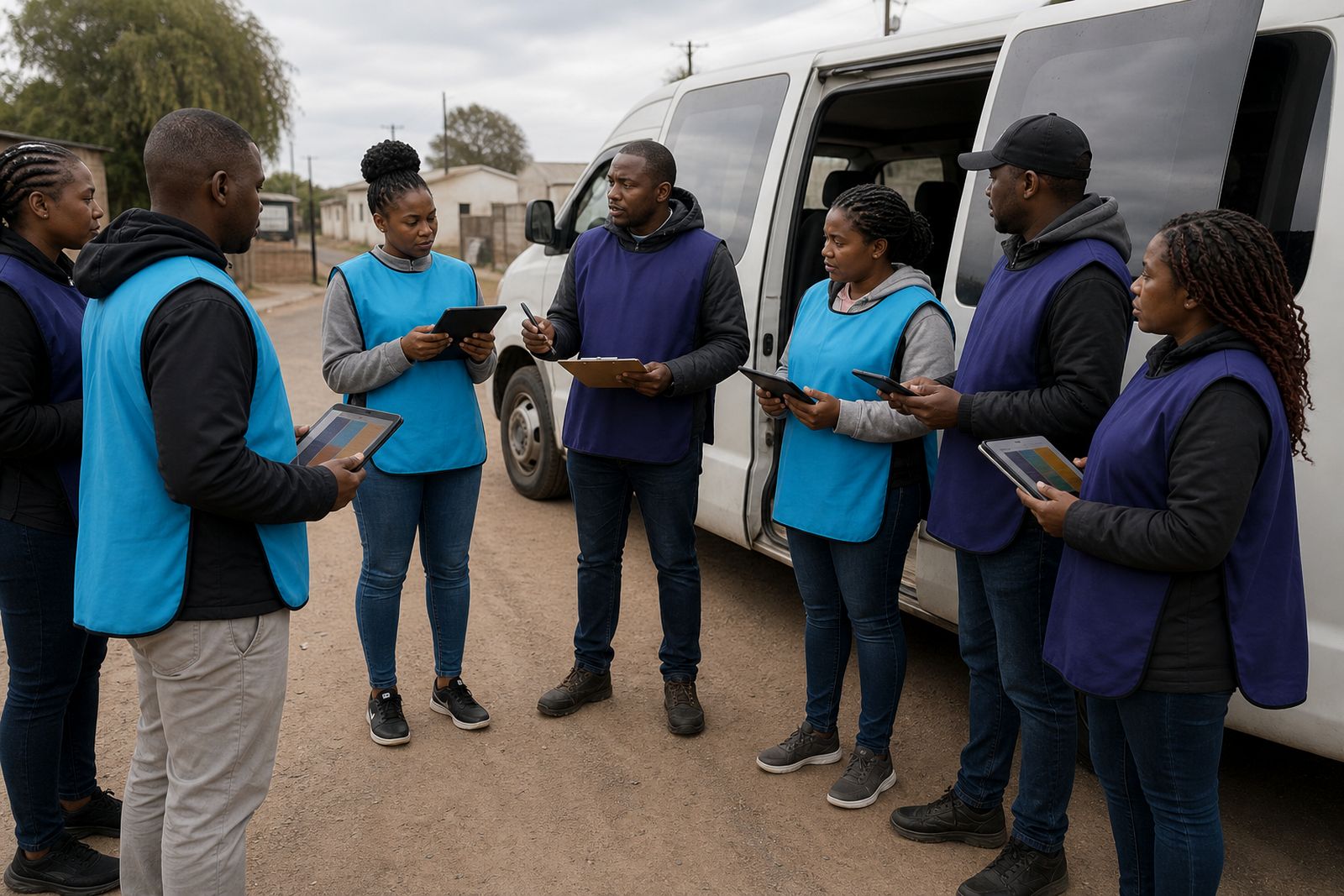
What is included in a national or provincial poll
Our national and provincial polling service is built for organisations that need a structured view of public opinion across South Africa or within a specific province. We work from Braamfontein and run projects across all nine provinces, covering metros, secondary cities, towns and rural areas where required. Each poll is scoped to the question being asked, the audience that must be represented and the reporting deadline.
We do not campaign, canvass or predict election results. Our role is to measure attitudes, awareness, priorities and perceptions using fair questions and a transparent method. Client data stays private and we do not publish commissioned findings.
- Questionnaire planning and wording review
- Sampling design for national, provincial or targeted geographic coverage
- Fieldwork by phone, online panel or face-to-face interviews
- Interviews in all official languages where the brief calls for it
- Weighting and quality checks before analysis
- Clear reporting with method notes and limits explained
How the process works step by step
We start with a scoping discussion to understand the purpose of the poll, who needs to be represented and how the findings will be used internally. From there we recommend the most suitable field method, timeline and geographic structure. A national poll may need a different approach from a provincial poll in Gauteng, the Western Cape or Limpopo for example, especially where urban and rural balance matters.
Once the scope is agreed, we draft or review the questionnaire. We check wording for neutrality, order effects, translation needs and interview length. Then we set the sampling plan and quotas, brief the field team and launch data collection. During fieldwork we monitor completions, regional spread and interview quality, making adjustments where a certain area or language group is slower to reach.
After fieldwork closes, we clean the data, apply weighting where needed and prepare a report. Clients receive findings in plain language together with method notes so the work can be read properly by managers, boards, policy teams or communications staff.
- Project scope and audience definition
- Questionnaire drafting or review
- Sampling and fieldwork plan
- Live fieldwork monitoring
- Data checks and weighting
- Report, debrief and follow-up support
What clients should prepare before fieldwork
A strong poll starts with a clear decision to support. Before fieldwork begins, clients should be ready to explain what they need to learn, which audience matters most and what level of geographic detail is required. It also helps to identify any public events, campaign activity, product launches or policy announcements that could affect responses during the field window.
If the poll will be repeated over time, we recommend settling core tracking questions early so that wave-to-wave comparisons remain fair. Any specialist terms, policy wording or brand language should be provided in advance so we can test whether ordinary respondents will understand it. This saves time later and avoids a questionnaire that sounds internal instead of public-facing.
- The main research objective and decisions the poll must inform
- The target population, such as adults nationally or residents in one province
- Preferred field dates and any hard reporting deadline
- Background documents, previous questionnaires or message testing points
- Any language requirements or region-specific concerns
- Internal sign-off contacts so approvals do not hold up fieldwork
How pricing is worked out
Pricing for national and provincial polls depends on the amount of work needed to reach the right people in the right places and to report the findings properly. A short online study in one province is different from a multilingual national project with phone and face-to-face interviewing. The cost is shaped by scope, method and operational complexity rather than by one flat rate.
Factors that usually affect price include questionnaire length, incidence of the target audience, number of provinces covered, urban and rural spread, translation requirements, fieldwork mode and turnaround time. Face-to-face projects usually involve more travel, supervision and municipal access planning where relevant. In some areas load-shedding, patchy signal or long travel distances can slow production, so timelines and logistics need to be realistic.
We explain the proposed approach before a project starts so clients understand what is included, where trade-offs sit and how deadlines affect fieldwork choices. If budget is fixed we can often suggest a simpler design without compromising the fairness of the questions.
Fieldwork and quality controls
Good polling depends on disciplined fieldwork. Whether interviews are conducted by phone, online or in person, we put controls around interviewer briefing, respondent eligibility, call handling, translations and data review. Provincial work often requires extra attention to local language use, access conditions and settlement patterns, especially outside major centres.
For face-to-face interviewing, route planning and safety checks matter. In dense urban areas this may involve apartment access rules or transport timing. In outlying areas, travel time and connectivity can affect daily output. For phone studies, contact patterns and callback scheduling are important so we do not only reach the easiest respondents. Small practical points like these make a difference and they are planned upfront.
- Screening rules to confirm respondent eligibility
- Neutral interviewer instructions and supervision
- Checks for duplicate, rushed or inconsistent responses
- Translation review for sense and fairness, not just literal wording
- Weighting where required to improve representativeness
- Method notes that set out how the poll was conducted
Reporting and aftercare
After analysis, we present the findings in a format that suits the client team. Some need a concise management summary, while others need a more detailed report for policy, communications or stakeholder planning. In all cases we include method notes and explain the boundaries of the evidence so the results are not overstated.
Aftercare is part of the service. We talk clients through the findings, answer method questions and help them interpret shifts carefully, especially when comparing provinces or tracking sentiment over time. If a follow-up wave is planned, we record the final questionnaire wording and fieldwork approach so the next round starts cleanly. Where clients need extracts for internal packs we can advise on wording so conclusions stay accurate and fair.
That follow-up matters because a poll is rarely useful on its own. It usually forms part of a longer decision process, and we stay available to support that next step.
What our Opinion Polling customers say
Verified Google reviews
Questions we get asked
Can you run a poll in only one province?
Yes. We run both national and province-specific polls. The method depends on the audience, the province, the field timeline and whether urban and rural coverage is needed.
Do you publish the findings from commissioned polls?
No. We do not publish client data. Findings are delivered to the client together with method notes and reporting support.
Can you help if we only have a rough list of topics?
Yes. We can help shape the questionnaire, refine the research objective and recommend a practical fieldwork plan before interviewing starts.
Also worth a look




Tell us about the job
Send sizes, materials and where you are through our contact form, and we will come back with the practical options.
Open the contact form