

Employee and member surveys
Honest feedback from staff and members helps organisations spot pressure points before they turn into bigger problems. We run structured surveys across South Africa with fair wording, careful fieldwork and clear method notes.
What employee and member surveys cover
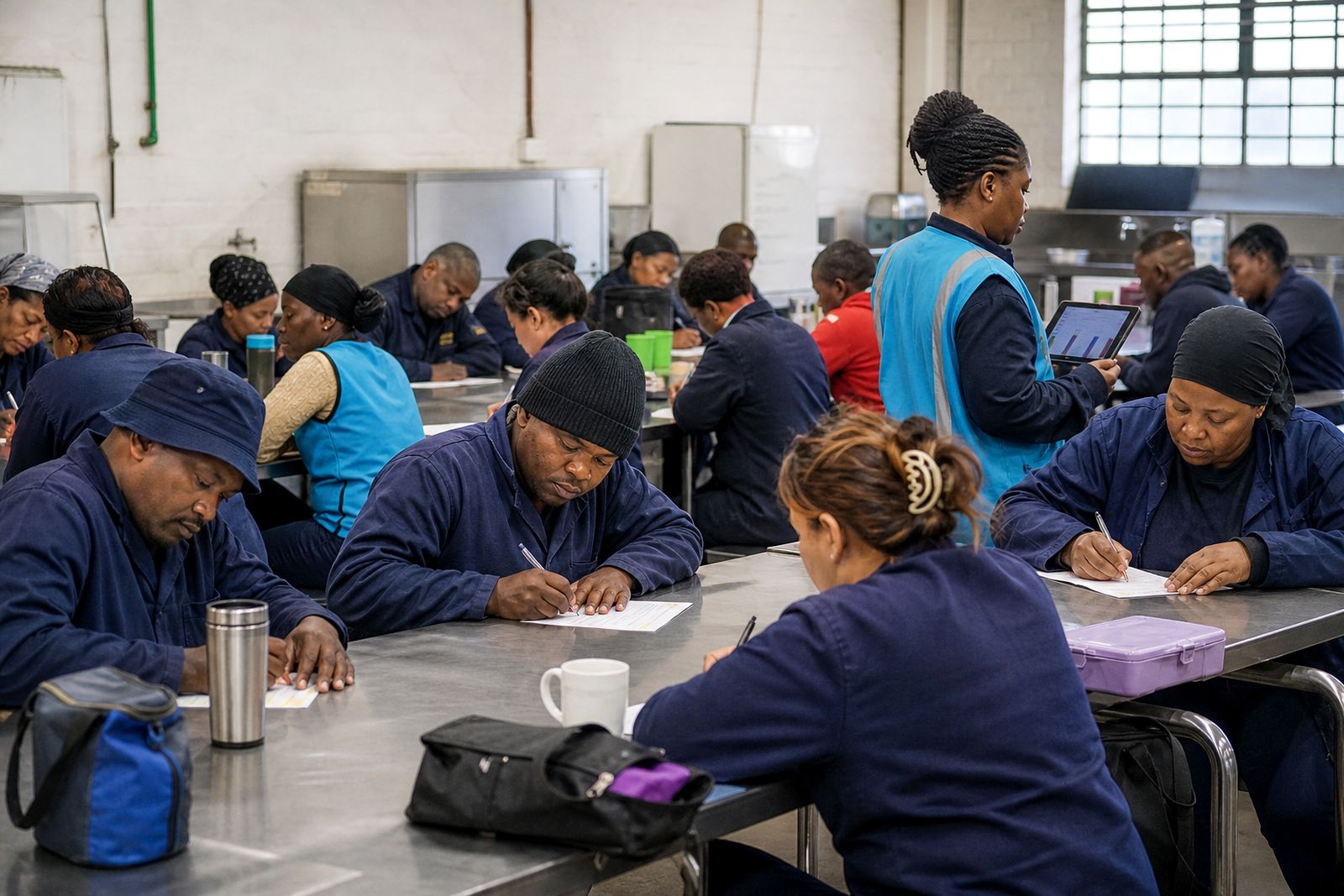
Employee and member surveys are used to measure attitudes, experiences and priorities inside an organisation or association. They are useful when management, HR teams, boards, unions, professional bodies, member associations or programme leads need a clear reading of what people are saying across branches, offices, sites or regions.
We can run these studies as once-off feedback projects or as repeat trackers. Topics often include communication, trust in leadership, workplace conditions, training needs, culture, member value, service satisfaction, retention risk, policy awareness, safety concerns and views on proposed changes. For national organisations this can be done across all nine provinces, with fieldwork matched to the audience and language needs.
- Employee surveys for office staff, site staff and distributed teams
- Member surveys for associations, unions, societies and networks
- Pulse surveys for quick check-ins on one issue
- Baseline and follow-up studies to compare movement over time
- Mixed-mode projects using phone, online and face-to-face interviews where needed
Survey options and practical limits
There is no single format that suits every workforce or membership base. We help choose a method that fits response access, literacy levels, language requirements, shift patterns and confidentiality concerns. Online questionnaires work well where respondents have reliable internet access and regular device use. Phone interviewing suits dispersed groups and allows supervision and quality checks. Face-to-face interviewing is useful where digital access is patchy, where respondents prefer spoken interviews, or where language support matters on the ground.
Each option has working limits. Online surveys can miss people with low data access or shared devices. Phone studies depend on accurate contact lists and people answering unfamiliar calls. Face-to-face work needs more planning for access, site rules and travel time, especially in remote areas. Focus groups can add depth but are not a substitute for a properly structured survey.
- Online self-complete surveys for connected audiences
- Phone surveys for members or staff spread across provinces
- Face-to-face interviews in all official languages
- Short pulse formats or longer diagnostic questionnaires
- Anonymous response designs where sensitive issues are involved
Where these surveys work well and where they do not
Employee and member surveys work well when an organisation needs evidence for decisions rather than informal impressions. They are especially useful before a policy change, after restructuring, during programme reviews, ahead of member renewals, or when leadership wants to understand morale across different groups. They also help where there are multiple branches from Braamfontein to regional offices elsewhere, because the same core questionnaire can be used while still allowing provincial or role-based comparisons.
They are less useful when the real need is disciplinary investigation, crisis mediation or legal fact-finding. A survey can show patterns and recurring concerns, but it is not built to prove individual misconduct. It is also not the right tool if management already intends to ignore the findings, or if the questionnaire is being used to push respondents toward a preferred answer. In those cases the work will not be fair and the feedback wont be trusted.
Set-up needs before fieldwork starts
Good preparation matters. Before fieldwork we confirm the audience definition, the contact route, language requirements, timing and approval lines. For employee projects this may include shift schedules, site access rules, union sensitivities, internal comms windows and whether workers may respond during working hours. For member studies we need to know how current the database is, whether branches operate differently, and whether there are protected categories that need separate handling.
Where face-to-face interviewing is planned, site conditions matter. We need safe interviewing points, permission from site management, and a plan for areas with poor mobile signal or limited power during load-shedding. In coastal areas, timing can matter for field teams moving between towns in wet weather, and in some municipal venues prior approval is needed before any interviewing takes place.
- Approved respondent list or clear audience definition
- Preferred languages and any translation review needs
- Dates to avoid such as payroll week, annual meetings or shutdown periods
- Access rules for offices, plants, campuses or branch venues
- Internal contact person for notices and fieldwork coordination
Confidentiality, reporting and ongoing care
People answer more honestly when they understand how their information will be handled. We explain the survey purpose clearly, keep fieldwork non-partisan and do not publish client data. Reports are written in plain language with method notes so that decision-makers can see how the work was done and where the findings should be read with care. If weighting is needed, that is explained. If certain groups were harder to reach, that is noted too.
There is also a care element after the report lands. Organisations should plan how they will share the findings internally, what commitments can realistically be made, and who will own follow-up actions. If a survey raises sensitive concerns such as harassment, safety, burnout or distrust in management, it helps to have a response path ready before fieldwork begins. Feedback without visible action can damage trust a bit more than no survey at all.
What to tell us when you enquire
The quickest way to scope the work properly is to send a clear brief through the enquiry form on our contact page. Tell us who the audience is, what decisions the survey must support, where the respondents are located and which method you think may fit best. If you are unsure, say that too and we can advise on the trade-offs.
Please include practical information from the start so we can recommend a suitable approach without back-and-forth delays.
- Whether this is an employee survey, member survey or a combined project
- National coverage or selected provinces, cities or branches
- Online, phone, face-to-face or mixed-mode preference
- Any language requirements and whether translations already exist
- Main topics to cover and any questions that are off limits
- Required reporting outputs such as topline, full report or branch cuts
If you already have a draft questionnaire, internal contact list or previous wave material, mention that in the enquiry. It helps us see what can be reused and what should be cleaned up before fieldwork.
What our Opinion Polling customers say
Verified Google reviews
Questions we get asked
Can you run surveys for staff in more than one province?
Yes. We run employee and member surveys nationally, including multi-site projects where offices, branches or operations are spread across provinces.
Do you only do online surveys?
No. We can use online, phone, face-to-face or a mixed approach, depending on access, language, contact quality and the sensitivity of the topic.
Will our survey data be made public?
No. We do not publish client data. Reports are prepared for the client with method notes so the findings can be read properly and used internally.
Also worth a look




Tell us about the job
Send sizes, materials and where you are through our contact form, and we will come back with the practical options.
Open the contact form